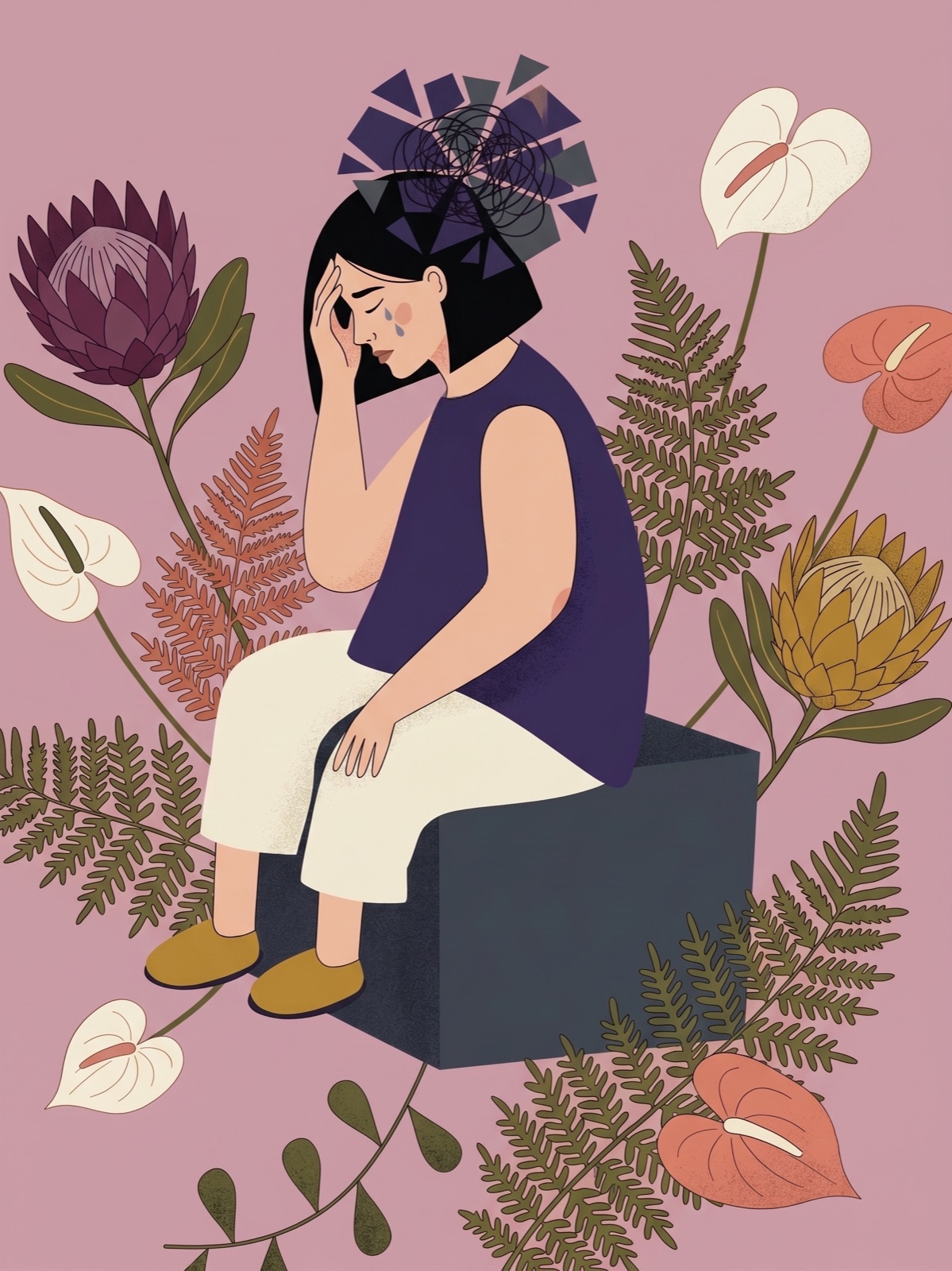
Perimenopause, Menopause and Migraine
If you've noticed your migraines behaving differently in your 40s or 50s, you're not imagining it — the menopause transition is one of the most consistently reported turning points in how people experience migraine.
The estrogen-withdrawal pattern, amplified
Menstrual migraine is driven by the sharp estrogen drop right before a period — the same mechanism that makes perimenopause difficult, just less predictable, because cycles become irregular and estrogen can spike and crash unpredictably rather than on a reliable schedule. This is why attacks in perimenopause often feel like they're "coming out of nowhere" compared to the more predictable menstrual migraine you may be used to.
What usually happens after menopause
Once periods have stopped for 12 months and you're formally postmenopausal, estrogen settles at a low, stable level — and for most people who had migraine linked to their cycle, attack frequency drops significantly at this point, sometimes dramatically. This is the opposite of what many people expect, and it's worth knowing while you're in the harder perimenopausal years: the instability, not the transition itself, is usually the problem, and it does resolve.
Hormone replacement therapy (HRT) is a separate, individual decision that can affect migraine in either direction depending on the type, dose, and delivery method — this is squarely a conversation to have with your doctor, factoring in your full migraine and cardiovascular history, not something to infer from general guidance.
Distinguishing menopause symptoms from something else
Night sweats, mood swings, low mood, and irregular bleeding can all be a normal part of this transition — but they're also nonspecific enough to have other causes. Tracking them alongside your migraine and cycle data over a few months is genuinely useful here: patterns that show up consistently around your cycle look different from symptoms that are constant or unrelated to timing, and that distinction is worth bringing to a doctor's appointment rather than working out alone.