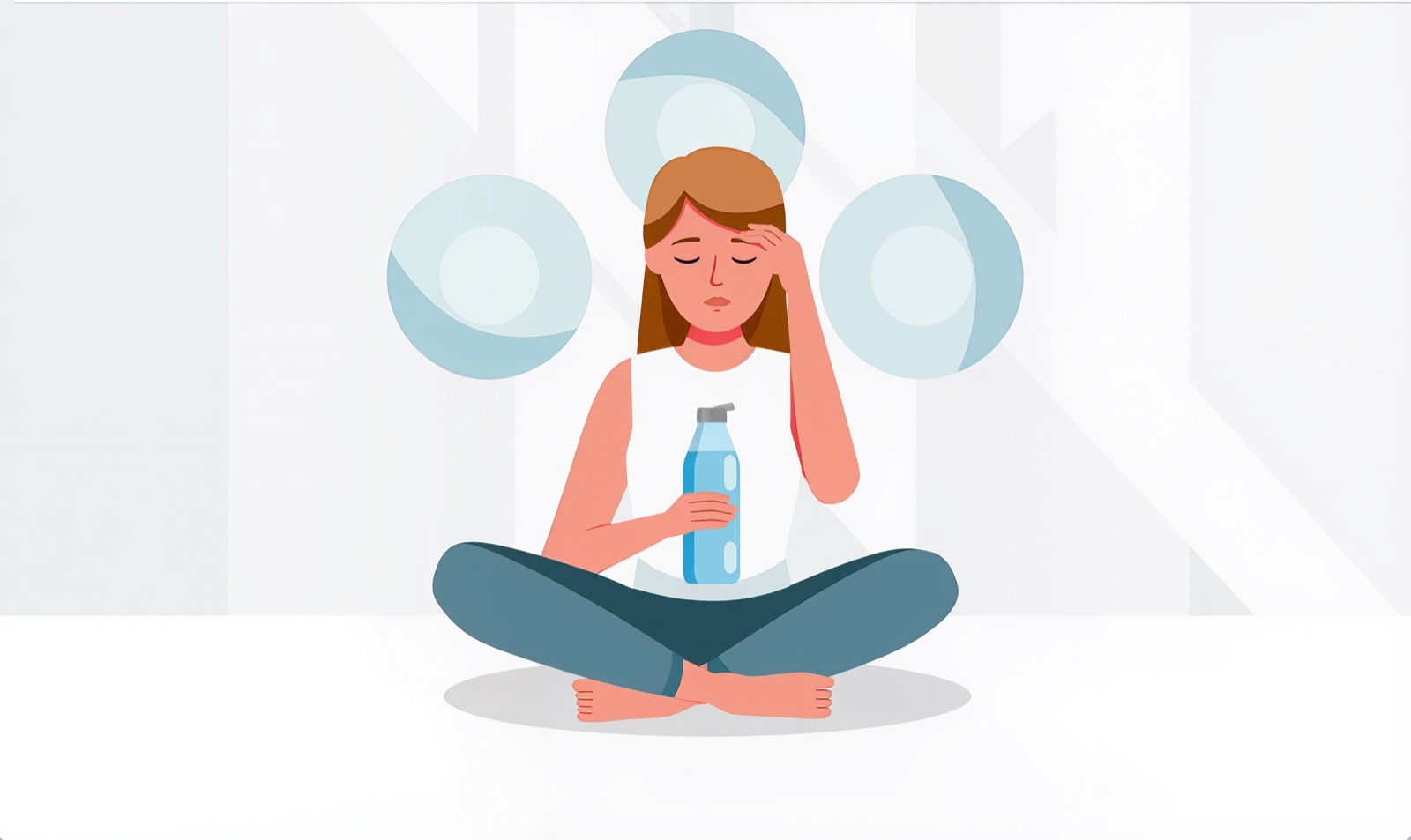
Hydration, Electrolytes, and Magnesium: What Actually Helps
Dehydration is among the most commonly self-reported migraine triggers, and it's also one of the easiest to address — which makes it worth taking seriously rather than assuming your triggers are all more complicated than "drink more water."
Hydration and electrolytes
Losing fluid without replacing electrolytes (sodium, potassium, magnesium) — through heat, exercise, alcohol, or simply not drinking enough over a day — can bring on a headache in people prone to migraine. If you exercise regularly (tracked in your log here alongside your migraine days), electrolyte intake around exercise is worth paying attention to specifically, since exercise-related dehydration is a distinct and common pattern.
Magnesium
Daily magnesium (commonly dosed around 300mg twice a day) has real evidence behind it as a preventive measure and is generally well tolerated, with the main downside being a laxative effect at higher doses. It's one of the few supplements mentioned specifically in clinical migraine prevention guidance, alongside vitamin B2 (riboflavin, commonly 400mg/day).
What to actually log
Because "supplements" and "hydration" are broad, vague categories that are hard to act on later, this app lets you log the specific brand and product you're using, and mark it as either something you take preventively or something you suspect might itself be a trigger (some electrolyte and pre-workout products contain caffeine or artificial sweeteners that are separately reported triggers for some people). Over a few months, that specificity is what turns "I should probably drink more water" into an actual, personal answer about what helps and what doesn't.
As with all supplements, check with your doctor before starting a new one regularly, particularly if you take other medication.